
Recommended Game Story · Warcraft Part 34
Chapters in this story
- Spoiler and Reading Order
- Table of Contents for This Part
- 1. The Light Protected by the Forest Kingdom
- 2. Heading North with the Urn
- 3. Sylvanas and the Rangers
- 4. War of Attrition Outside the Gates
- 5. The Key of the Three Moons
- 6. The Messenger to Silvermoon
- 7. A Conquest That Denies Even Death
- 8. The Last King and the Crumbling Capital
- 9. Upon the Waters of the Sunwell
- 10. A War with Two Masters
- 11. The Names of the Survivors
- 12. The Next Step Toward Dalaran
- Reading Names and Concepts Together
- Previously Released Connection Parts
- The Path Leading to the Game
- Official Materials and Verification Scope
Spoiler and Reading Order
This installment covers the invasion of Quel'Thalas in the Undead campaign of Warcraft III: Reign of Chaos. We follow the reasons Arthas heads to the northern elven kingdom after the fall of Lordaeron, the resistance of Sylvanas Windrunner, the Key of the Three Moons, the fall of Silvermoon, and the corruption of the Sunwell. Characters and terrain depicted more specifically in Reforged are distinguished from the original scene composition. This is a narrative commentary written based on events confirmed in games, official manuals, and developer history introductions; it is not a translation of official novel passages or dialogue. The light, sound, and atmosphere of the scenes are reconstructions to aid understanding.
Table of Contents for This Part
- The Light Protected by the Forest Kingdom / 2. Heading North with the Urn / 3. Sylvanas and the Rangers / 4. War of Attrition Outside the Gates / 5. The Key of the Three Moons / 6. The Messenger to Silvermoon / 7. A Conquest That Denies Even Death / 8. The Last King and the Crumbling Capital / 9. Upon the Waters of the Sunwell / 10. A War with Two Masters / 11. The Names of the Survivors / 12. The Next Step Toward Dalaran
1. The Light Protected by the Forest Kingdom
North of the ruins of Lordaeron lay a kingdom built upon a different history. If the human walls bore the scars of long wars, the forests and towers of Quel'Thalas held the layered lives of elves who had crossed the sea to begin anew. This was not merely a city with many mages; it was a homeland built by a people who had endured exile and migration. The roofs of Silvermoon, the forest paths, and the defensive lines not easily visible to outsiders were the face of the order that this homeland had guarded for ages.
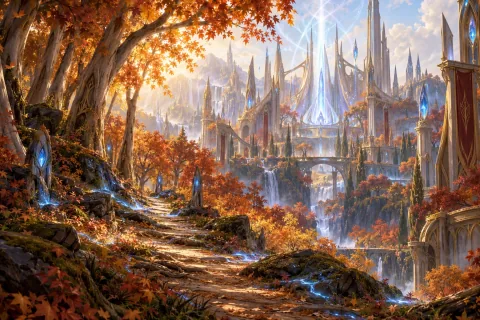
At the center of that order was the Sunwell. According to official history, the high elves connected water brought from the Well of Eternity to the ley lines of their new land to create the Sunwell. The arcane magic of the well permeated the kingdom deeply. It was the source that allowed the elves to learn and wield magic, accepting that power as a natural part of life. Thus, saying one lost the Sunwell meant more than just losing a holy site; it was akin to the very foundation of the world that supported them shaking.
Quel'Thalas was never completely cut off from the world. During the war against the Amani trolls, they joined hands with the humans of Arathor, gaining military aid in exchange for teaching magic. That connection led to the development of human magic and the history of Dalaran. Behind them also lay the Second War. Between elves and humans, alliances, duties, and mutual expectations and disappointments had accumulated. Just because the northern forests seemed quiet did not mean they lacked memories of war.
The reason this invasion was particularly cruel was that the enemy could not be understood through those memories alone. Past invaders wanted land, victory, passages, and dominion. The death knight now marching north intended to use the kingdom's most precious magic for the resurrection of another being. To him, the Sunwell was not a place to understand elven life, but a means to fulfill his command. The two sides were looking at the same map but seeing entirely different things.
2. Heading North with the Urn
Arthas had already severed his former self. The prince who had left for Northrend in search of Frostmourne had his soul stolen by the cursed blade. Upon returning, he killed his father, Terenas, and placed his homeland under the feet of the Scourge. The resistance of his former mentor, Uther, and the paladins could not stop his new path. The man who once tracked the source of the plague was now the vanguard of the army spreading it.
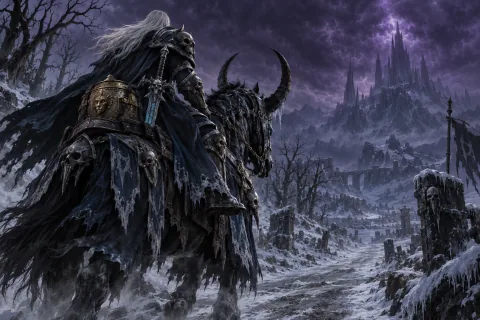
Yet, the Quel'Thalas expedition was not a march that trampled everything in its path, intoxicated by the momentum of victory. In the Lich King's plan, there was a figure who needed to be revived: the necromancer Kel'Thuzad, whom Arthas had killed in the human campaign. Having not ended with his death, he appeared to Arthas as a ghost to reveal the next destination. The immense power of the Sunwell could raise his remains.
What was used to hold those remains was the urn that had stored the ashes of Terenas. With the death of his father, the death of his mentor, and the collapse of his homeland, the very remnants of those lives were used as tools for the next conquest. Remembering this connection makes the meaning of the march north clear. What Arthas discarded was not just personal relationships with a few people; royal authority, the duty of a paladin, and the customs of honoring the dead all became things unworthy of preservation before his new goal.
To the reader, it may appear as a strange companionship. The necromancer who fell to the Arthas who hunted the plague was now leading him toward the source of the elves' magic. However, within the Scourge, death does not signify the end of a relationship. Who kills becomes less important than who raises and controls. What Arthas would do in this kingdom would etch that principle into both a single person's fate and a nation's history.
3. Sylvanas and the Rangers
Standing before the invading army was Sylvanas Windrunner. She was still a living high elf, the Ranger-General of Silvermoon and commander of the Quel'Thalas Farstriders. Thinking of the future Dark Ranger or Forsaken leader first causes one to read this moment backward. What the Sylvanas of this time sought to protect was not the past she had lost, but the living homeland and the people within it.
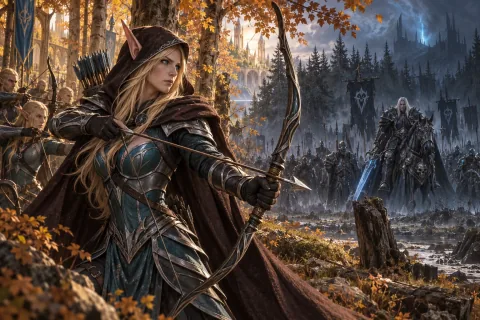
The fact that the rangers stood in the forest is also important. The kingdom's defense did not consist solely of the great towers of the capital. There was the work of those who discovered movements at the border, blocked paths, delayed the enemy's advance, and relayed danger to the rear defensive lines. Sylvanas met Arthas at that very position. This is why her resistance cannot be evaluated solely by the short-lived victory or defeat at the gates. The act of preventing the attacker from heading straight to the Sunwell without any interference was itself part of the defense.
In the campaign, the two block each other's paths from the beginning. Sylvanas tries to stop the Scourge, and Arthas has no interest in the responsibility of protecting the kingdom. This conflict also contains the paradox created by his former identity as the Prince of Lordaeron. Humans and elves had once stood on the same side in previous wars. Now, the person who should have carried the name of the human kingdom entered the elven land, destroying even that connection.
Knowing Sylvanas's future path does not mean we should view this resistance only as decoration for a predetermined tragedy. She engages the invading army before they reach the capital, moves to rear defensive lines, and continuously attempts to send warnings. What the reader must follow is not just the conclusion of failure, but the choices and efforts that actually existed before reaching that conclusion. Even before an army that brought death, there was a commander trying to issue orders and buy time.
4. War of Attrition Outside the Gates
The Undead campaign of Reign of Chaos does not end the Quel'Thalas expedition in a single battle. One crosses the outer defensive lines, passes through forests and waterways, opens the next gate locked by magic, and finally enters the capital and the Sunwell. This structure shows that the kingdom was vast and possessed multiple layers of defense. Even a reader who knows the final destination must read the resistance that occurred along the way.
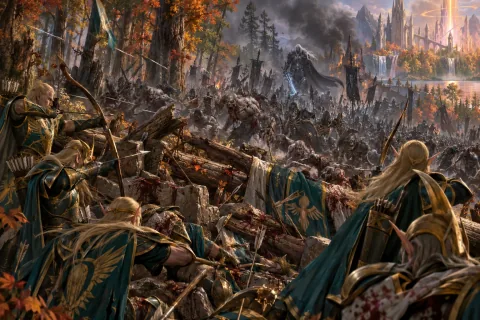
At the first gate, the forest becomes both a shield and an obstacle. The elves block the invading army based on familiar terrain, and Arthas breaks that defense to secure a path. The game directly depicts the process of breaking through trees and gates. The landscape that protected the kingdom becomes an obstacle to be removed in the eyes of the conqueror. The reason the scene featuring green forests and elegant patterns looks beautiful, and the reason that scene is a tragedy, are not separate.
There was an imbalance in the war between the Scourge and the living army. Living defenders must rest, they suffer wounds, and if they die, they can no longer stand in the positions they guarded. The invader who uses necromancy drags even the dead back into the war. While one need not conclude that every corpse was raised in the same way, it is clear where the military horror of the Scourge comes from. The loss of the defender could become the resource of the attacker.
Therefore, reading the scene where Sylvanas retreats and places hope in the next defensive line as a simple flight misses the flow. If the enemy could not be stopped outside, one had to create an opportunity to resist again inside. Here, a single defeat did not mean the abandonment of the entire war. However, the enemy was following that retreat. Even while defensive lines remained, the safe space of the kingdom gradually diminished.
5. The Key of the Three Moons
The next defensive line had conditions that could not be solved by sword strikes alone. The elven gate leading inward required a magical key. In the campaign The Key of the Three Moons, Arthas's army must secure three moon crystals to complete the key. The process of gathering elements stored in separate magical vaults connects to the battle heading toward the capital.
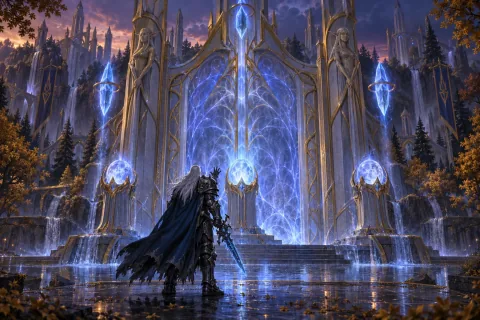
This scene shows that the defense of Quel'Thalas did not rely solely on thick walls. Knowing the path and having the authority to use the path are different. The magical lock adds another barrier on top of the physical passage. The kingdom's magic was a power that enriched life and, at the same time, a technology that protected the borders. Instead of respecting the meaning of that technology, Arthas took the operating conditions and used them.
Waterways also delay the advance. The player must provide transportation and paths across rivers, and the mission includes movement using goblin zeppelins. In this section, one must distinguish between the actual campaign objectives and novel-style descriptions. Just because there is a mission to cross a passage with a zeppelin does not mean the movement order and transport frequency of every unit in history are fixed. The core shown by the game is that terrain, logistics, and securing the key were all necessary in the process of reaching the gate.
Once the three elements are gathered and the door opens, the separate passages the defenders relied on become a single path of advance. The reason Sylvanas continues to block Arthas becomes more desperate. Once the outer forest is surrendered and the inner gate is opened, the city where people live and the Sunwell are next. The landscape where the gate still stands and the enemy who has already passed the gate exist simultaneously. The fact that the architecture remains does not mean safety remains.
6. The Messenger to Silvermoon
As one approaches the capital, the meaning of defense is not explained solely by defeating the enemy. The warning announcing the invasion must reach the inside. In The Fall of Silvermoon, Sylvanas tries to send messengers, and Arthas tries to intercept them. The war does not take place only between gates and armies. It also takes place over the time those behind have to prepare and their right to know the danger.
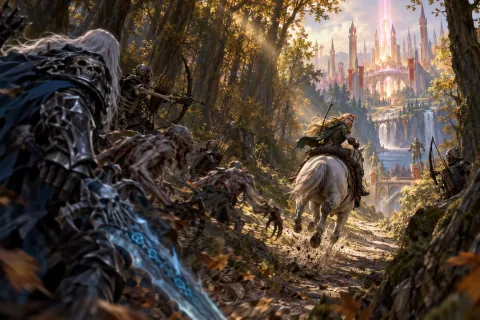
Why is the movement of a few messengers important? If the inner city does not know the situation outside, it may misjudge the scale and speed of the invading army. Knowing that one defensive line has fallen is different from knowing that the enemy has reached the very front. Sylvanas's mission was to command the soldiers fighting in front while simultaneously connecting the kingdom's other defenders so they could understand the same war.
In the game, this is expressed as the side objective of stopping messengers and moving enemies. The map in Reforged also features scenes using waterways and ships. Here, the success of a specific play, the number of messengers stopped, and the order of attack are not turned into a single fixed history. The conflict shown by the actual mission is clear. Sylvanas tried to send a warning, and Arthas tried to ensure that warning would not interfere with his expedition.
This competition makes the relationship between the two commanders sharper. To Arthas, Sylvanas was an enemy who went beyond a physical garrison to repeatedly delay his plans. To Sylvanas, Arthas was an invader who destroyed her homeland while trying to cut off even the possibility of announcing that destruction in advance. As the fight drags on, military obstacles and cruelty toward the individual become intertwined. What happens next reveals that imbalance in the most horrific way.
7. A Conquest That Denies Even Death
Sylvanas was ultimately defeated by Arthas. If it ended here, it would be the death of a defensive commander seen in many war stories. However, in this war, there was no end given even after that death. Arthas tore her soul from her body, turned her into a banshee, and forced her to serve the Scourge. Blizzard's official character introduction clearly explains the relationship, noting that he did not allow a complete death to the Ranger-General who resisted so strongly.
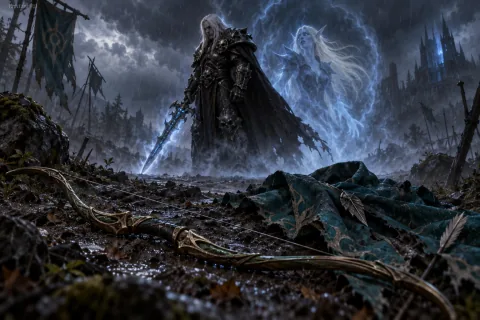
One should not read this change as the moment she chose the power of darkness. The living Sylvanas tried to protect her homeland. The Sylvanas who became a banshee was placed under the army that trampled that homeland. There was no consent from her in between. The commander's defeat led to the loss of control over her own existence. The violence that strikes down the body and the violence that subjugates the soul occur together in this scene.
A banshee does not simply mean an elf soldier with pale skin. What is important in this scene is that the soul separated from the body was bound to a cursed undead existence. If one combines the flow of Sylvanas later reclaiming her body and escaping the Scourge's control with this event, the sequence of change disappears. She is not yet the independent Queen of the Forsaken, nor the leader of the Horde. She is the defender of her homeland in forced obedience.
To a reader who knows the world that follows, Sylvanas becomes a complex and controversial figure. However, to explain her later choices, one must first look at what was taken here. There is the land she was responsible for, the life she lived, and the freedom that she could not even conclude her own death. While this experience does not justify every action later, it becomes the starting point for understanding why her narrative repeatedly asks about death, will, dominion, and liberation.
8. The Last King and the Crumbling Capital
Even after Sylvanas's defeat, the kingdom's final resistance remained. Official history records that countless elves and King Anasterian Sunstrider died in the invasion of Quel'Thalas. The end of the king's long reign was an event that went beyond the death of one person, marking the interruption of the nation's continuity. What Kael'thas, who would return later, would see was not a briefly vacated court, but the place where the center of the kingdom was destroyed.
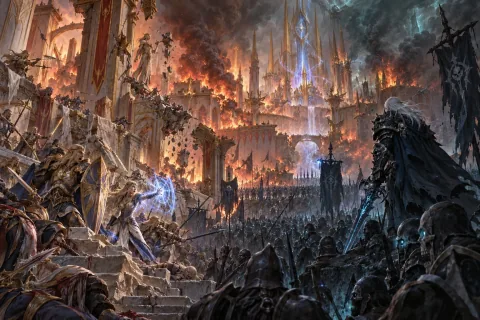
The difference in expression between the original and Reforged is also clarified here. Reforged's The Fall of Silvermoon places Anasterian and the swordsman Thalorien Dawnseeker as more specific characters on the battlefield. The final approach to the Sunwell, the presentation of Frostmourne on the water, and the appearance of the elven gates can also be confirmed on the game screen. This is a composition that shows the same invasion with more detailed maps and scenes. It does not explain that the same characters appeared in the same positions on every screen of the original.
The fall of the capital collapses many kinds of lives at once. The rangers buy time from the outside, and soldiers and mages continue the defense from the inside, but the order they all relied on narrows. The king and commander die, the magical defense is breached, and the path to the Sunwell is opened. Although it feels like the end of a kingdom, it should not be equated with the complete extinction of all residents.
Early World of Warcraft manuals contain a description that extremely compresses this tragedy. Subsequent official history and race introductions clearly deal with the fact that the survivors gathered again and continued under the name Blood Elf. Therefore, this article does not write that not a single elf remained. The scale of the massacre was large and the kingdom collapsed, but there were people who survived. The story ahead begins with that very survival.
9. Upon the Waters of the Sunwell
Finally, Arthas reached the Sunwell. The heart of the homeland that needed to be protected became the ritual site of the conqueror. When Kel'Thuzad's remains met that immense magical power, the old necromancer did not return as a living human, but rose as a lich, a stronger undead being. It was a success in the Scourge's plan, and for Quel'Thalas, that success itself was a catastrophe.
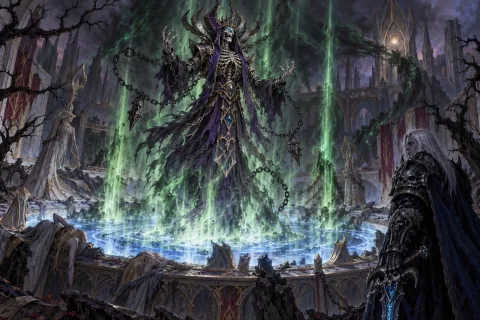
If one actually looks at the scene in Reforged, the contrast is clear. The light of green necromancy spreads around the well, which held blue water and bright energy, and the skeletal form of Kel'Thuzad rises. This change in light is distinguished from the scene showing the restored Sunwell later. It is not yet a story of recovery and new holy power. It is the moment of consuming and polluting the source of elven civilization for the resurrection of the dead.
The pollution remains even after the ritual ends. It was not an event where the water returned to normal once the invading army left, and the elves could use magic as before. The Sunwell was no longer a source one could safely rely on. For the people who had been connected to the well for a long time, the loss of magic led to problems that shook their bodies and daily lives. Official history connects the suffering, helplessness, and thirst for magic that appeared later to this loss.
Therefore, this expedition has two different endings. For Arthas and Kel'Thuzad, preparations to move to the next mission were complete. For the elves, the conditions for living the next day had changed. At the same water's edge, someone became stronger and someone lost the foundation of their life. If one only watches the scene where magnificent magic erupts and passes by, the tragedy of the people left behind is missed. The pollution of the Sunwell is not a single ritual, but the beginning of a long aftermath.
10. A War with Two Masters
Only after Kel'Thuzad's resurrection does the larger connection of the expedition reveal itself. The Scourge is a massive catastrophe in itself, but it is also a tool to open the way for the Burning Legion to enter Azeroth. The Lich King Ner'zhul and the dreadlords who monitor him ostensibly conduct the same war. However, if one explains the relationship as colleagues with the exact same purpose, the subsequent conflict cannot be understood.
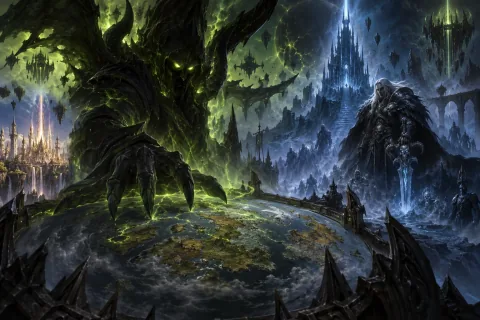
The Dreadlord scenes in the campaign illustrate the surveillance surrounding Ner'zhul's loyalty and control. Kel'Thuzad's ghost, while conversing with Arthas, shows an attitude of not wanting to reveal all information to the Legion's agents. Even after he is raised again, tension remains between the Lich King's intentions and the role expected by the Legion. Behind the story was the structure that even the master moving the Scourge was placed under the command of a stronger entity.
Here, we do not create the inner thoughts of the moment by pre-determining later events. What Ner'zhul thought at every moment or whether Arthas understood the entire plan from the beginning cannot be concluded solely from the scenes confirmed. However, the fact that there is information that they monitor and hide from each other is important. The defenders of Quel'Thalas fought the death knight in front of them, but behind that war, the relationship between the Legion and the Lich King was also connected.
Because of that, the event of Kel'Thuzad rising as a lich does not end with simply gaining one strong subordinate. He is the figure who will perform the next stage of rituals and connections. The power of the Sunwell moved from the elven homeland to the Scourge, and that Scourge heads toward the larger invasion the Legion desires. It is the point where an expedition that started like a small border battle connects to the crisis of all of Azeroth.
11. The Names of the Survivors
The history of Quel'Thalas does not end at this scene. Kael'thas Sunstrider, the son of Anasterian, returns home from Dalaran to face the destruction and loss. The official Burning Crusade Classic: The Story So Far explains the flow of how he gathered the survivors and came to use the name Blood Elf to honor those who were sacrificed. Sin'dorei was not the name of the invader, but the name of those who survived while remembering the loss.
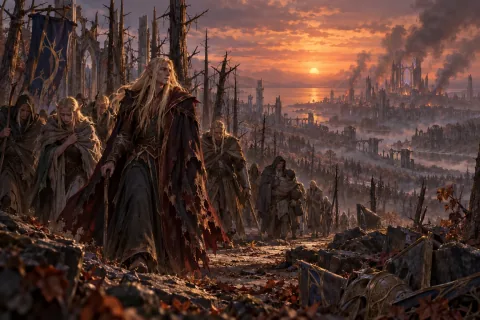
Just because this name was created does not mean that the political choices of all elves became the same from that day on. Which alliance the survivors choose, who remains in their homeland, who follows Kael'thas, and how they intend to obtain magic thereafter is a longer story. This episode covers the beginning of that crossroads. For those who remained, there was not only the issue of rebuilding the governing system and the army, but also the problem of how to endure the loss of magic.
The restored Sunwell, the Horde, and the rule of Lor'themar Theron that appear in current official Blood Elf introductions are the results of a different era that follows this invasion. If one puts that into the current scene in advance, time collapses. This is why it is not described as if the red-bannered Blood Elf army had already met Arthas. The kingdom that faced this war was the Quel'Thalas of the high elves, and the subsequent changes began from those wounds.
The recovery that follows does not make the wounds of the past disappear. The survivors remember those they lost, and the new leader makes decisions within the conditions of the collapsed nation. Sylvanas is bound to the army of death in a different form, and Kael'thas must find a way to lead the remaining people. One invasion sends the two in completely different directions, but at their starting point lies the destruction of the same homeland.
12. The Next Step Toward Dalaran
Arthas had no reason to stay long before the Sunwell. Kel'Thuzad had risen again, and the next stage of the invasion remained. The next destination was the city of human mages, Dalaran, and the power stored there. If one recalls the connection that elven and human magic had long ago, the flow of the magic stolen from Quel'Thalas heading back to the heart of human magic feels even more cruel.
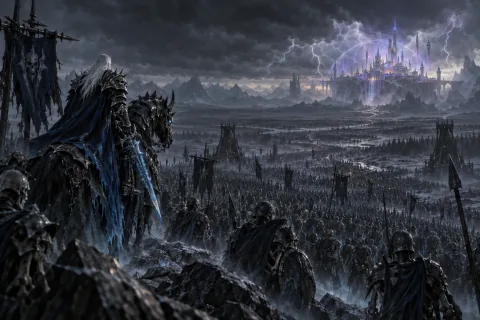
On the forest paths, Sylvanas tried to buy time; at the gates, the magical key tried to stop the invasion; and in the capital, the final resistance tried to protect the road to the Sunwell. Passing through all those connections, Arthas resurrected one person's remains as a lich. If one calculates the results of a military victory only as the resurrection of remains, the price of erasing the kingdom is not visible. The reader must see the invader's mission and the defender's world together.
The fall of Quel'Thalas reveals the cruelty of the Scourge from a different angle. The plague kills people, necromancy binds the dead back into war, and the pollution of the Sunwell changes even the lives of those who survived. Sylvanas's tragedy, which does not end with death, and the elf's tragedy, which continues because they survived, are in the same war. The subsequent narrative looks back on those two losses for a long time.
In the next main installment, we follow the Legion's invasion, leading to the resistance of Dalaran, the summoning ritual of Kel'Thuzad, and the appearance of Archimonde. What ended in Quel'Thalas was not Arthas's war. What ended was the old safety of the kingdom that existed until he passed through. Behind that, an even larger war was still waiting.
Reading Names and Concepts Together
Quel'Thalas: The northern kingdom built by the high elves. It suffers massive damage in this war, but the entire population does not disappear.
Silvermoon: The capital of Quel'Thalas. The city and the Sunwell are related but are not two names for the same place.
Sunwell: The source of arcane magic created with water brought from the Well of Eternity and the magic of the new land. This part is the period when it was polluted by necromancy and is distinguished from its later restoration.
Sylvanas Windrunner: The Ranger-General who was alive at the time. She is forcibly converted into a banshee after being defeated by Arthas, and the event of becoming the independent Forsaken leader is later.
Farstriders: The elven ranger organization of Quel'Thalas. They play an important role in the defense of the forests and borders.
Key of the Three Moons: The key to the elven gate completed with three moon crystals in the Undead campaign. It does not explain the number of player transports and the results of side objectives as fixed history.
Anasterian Sunstrider: The King of the High Elves who died during the invasion. He is Kael'thas's father and appears specifically on the Reforged battlefield.
Thalorien Dawnseeker: An elven swordsman specifically placed in the final defense by Reforged. We do not translate battle dialogue from novels that we have not verified.
Kel'Thuzad: The necromancer who became a lich by having his remains resurrected at the Sunwell. It is not a resurrection that returns to his original human body.
Sin'dorei / Blood Elves: The name used by Kael'thas and the survivors after the invasion to remember the victims. We do not retroactively apply later clothing and political affiliations to the defenders before the invasion.
Previously Released Connection Parts
Warcraft Part 18 — The Exiled Highborne and Quel'Thalas, The Voyage to the Sunwell: /en/community/tm-warcraft-saga-part018-20261008
Warcraft Part 19 — The Human Kingdom and Troll Wars, The Connection of Magic and Alliance: /en/community/tm-warcraft-saga-part019-20261008
Warcraft Part 32 — The Spread of the Plague and Stratholme, Arthas's Choice: /en/community/tm-warcraft-saga-part032-20261008
Warcraft Part 33 — Northrend and Frostmourne, Return to Lordaeron and Uther: /en/community/tm-warcraft-saga-part033-20261008
The Path Leading to the Game
This story is part of the Undead campaign of Warcraft III: Reign of Chaos. You can follow this invasion directly through the cutscenes and progression of the actual campaign. Please check the works provided and terms of use on the current official page. The link below is placed only after the main body of the story.
Warcraft III Reforged Official Purchase Page: Warcraft III — current official product and campaign inclusion
Official Materials and Verification Scope
Verification Date: October 8, 2026 (UTC). This was written based on settings and events confirmed in the official public materials below. Public samples and setting introductions were only verified to the extent of their public scope, and it is not indicated that the entire book was read. The illustrations are AI reconstructions, not official images.
Sylvanas Hero Week — official Ranger-General and banshee history
Tales from the Smithy: Reforged the Undead — Arthas and Kel’Thuzad design
Warcraft: Sylvanas — official novel introduction and reviewed scope
Blood Elf — official Sunwell history and survivors
Warcraft III: Reign of Chaos — Quel'Thalas invasion, Sylvanas, Sunwell game scenes
Burning Crusade Classic: The Story So Far
World of Warcraft — early official manual Arthas and Lich King history
Warcraft III: Reign of Chaos — official 2002 manual
Warcraft III — current official product and campaign inclusion
comments 1
쿠엘탈라스 침공 당시 실바나스가 보여준 저항은 단순한 지연 전술을 넘어 왕국 전체의 방어 체계를 유지하려는 의지였는데, 당시 순찰대가 수행했던 방어 임무 중 후방으로 보내려던 경고가 실제 게임 내 서사적 장치와 역사적 기록 사이에서 어느 정도 비중으로 다뤄지고 있는지 궁금합니다.