
Recommended Game Story · Warcraft Part 24
Chapters in this story
- Chapter 1: War Began by Changing the Faces of Neighbors
- Chapter 2: The Red Plague and the Image of a Dead Wife
- Chapter 3: Gul'dan and the Shadow Council, Invisible Rule
- Chapter 4: The Final Counterattack of the Elements that Guarded the World
- Chapter 5: The Cup Grom Lifted
- Chapter 6: Cities Fell and the Last Wall Remained
- Chapter 7: Shattrath, a Night Without Light
- Chapter 8: An Army Without Enemies, A Dying Homeland
- Reading by Names and Relationships
- Related Public Excerpts to Read Together
- Official Materials and Scope of Confirmation
The Birth of the Horde: A World Deprived of Ancestral Voices
This installment covers the period in the original timeline when the Orc clans of Draenor were bound into the Horde and the Draenei cities fell. The events have been reconstructed by cross-referencing the confirmed scope of Chronicle Volume 2, official novel introductions, game manuals, and the short story Unbroken. It includes major conclusions and accounts of the massacres and evacuations. It does not mix in the alternate timeline from the 2014 Warlords of Draenor or the film version. The tone of the scenes is narrative commentary, and no new dialogue has been fabricated to pass as official speech.
Chapter 1: War Began by Changing the Faces of Neighbors
The clans of Draenor were not a single Horde from the beginning. The Orcs followed their own lands and chieftains, honoring their ancestors and maintaining relationships with the elements. At the Kosh'harg, clans that usually competed gathered to share news. Relations with the Draenei were not the same for every clan; there were borders and trade, alongside both friendships and old distrust. In the world where the friendship of Durotan and Orgrim grew, other choices were still possible.
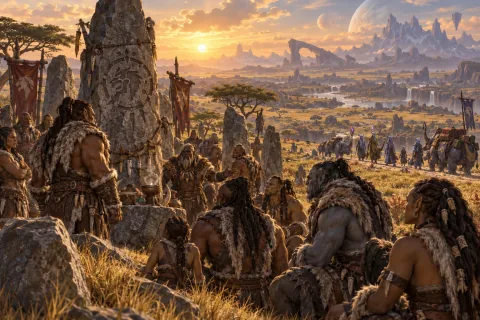
Kil'jaeden saw that gap. Finding Velen, who had fled Argus, was not a simple pursuit for him. The very fact that a former comrade had rejected the Legion's offer and lived for ages avoiding pursuit fueled his obsession. If the Draenei had gained a new home, their neighbors in that home could be turned into weapons. It was a way to destroy Draenor by the hands of its own inhabitants, without needing to descend under the banner of the Legion.
Orc tradition was both an obstacle and a gateway to this plan. To move a community that trusted in ancestors and respected the words of shamans, the voice of authority heard from within was more effective than the commands of an external invader. Before the enemy could break down the gates, the first thing that needed to change was the judgment of who was dangerous and who should be trusted.
The invasion of the Burning Legion began outside the battlefield at this time. Suspicion crept between villages not yet besieged and neighbors not yet fighting. Before the warriors of the Horde would ever lift a weapon against an enemy, the work of choosing the faces that those weapons would target had already been done.
Chapter 2: The Red Plague and the Image of a Dead Wife
Chronicle explains that Gul'dan used fel magic to torment the elements of Draenor and spread a red plague among the clans. The shamans could not master the sickness, and their communion with the elements faltered. A structure was being built that created problems and then shifted the blame for those problems onto others. As the power the community was accustomed to relying on weakened, the promises of a new salvation grew louder.
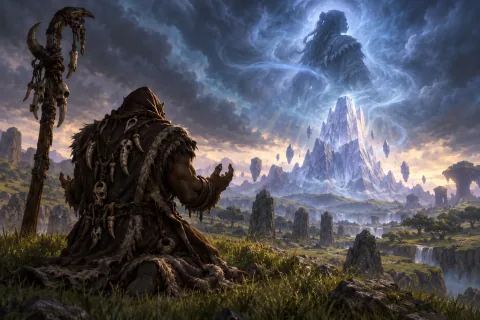
At that time, what appeared to Ner'zhul of the Shadowmoon clan was not the face of a strange demon. Kil'jaeden entered his dreams in the form of his dead wife, Rulkan. Before a shaman who had already suffered loss, old love and faith in the ancestors became vulnerabilities easy to exploit. The false Rulkan spoke of the plague and elemental unrest as being caused by the Draenei, demanding war.
Ner'zhul was a respected leader. When he judged that a crisis had arrived that his clan alone could not handle, other chieftains listened. The argument to set aside clan disputes and face a common enemy was presented as a path to saving the world. The question of whether the Draenei had actually attacked took a backseat to the question of whether one could ignore the warnings of the ancestors.
However, that voice was not endlessly gentle. Ner'zhul received violent demands unlike the spirits he had known, and he was aware that the image of Rulkan had vanished after contact with a new helper began. He headed to Oshu'gun in search of answers. The sanctuary he had believed was connected to the ancestors became a place to question the identity of the voice he had followed.
When he began to doubt, the plan was already at a stage that did not move by the consent of one person alone. The anxiety of the clans had been turned into a justification for war, and other hands were prepared to execute that justification. The short connection in official introductions where Gul'dan steps into the place Ner'zhul vacated contains the tragedy of a leader's belated doubt failing to turn the community around.
Chapter 3: Gul'dan and the Shadow Council, Invisible Rule
The power Gul'dan chose was different in nature from the shamanism that asked for help from the elements. The fel magic learned from the Legion provided faster and more destructive means. As the power of the Warlock was revealed in a world where the elements did not respond, the pressure to abandon weakened shamanism and follow the new power grew. The reason the world was sick and losing its strength was turned into the reason to accept the power that claimed to save it.
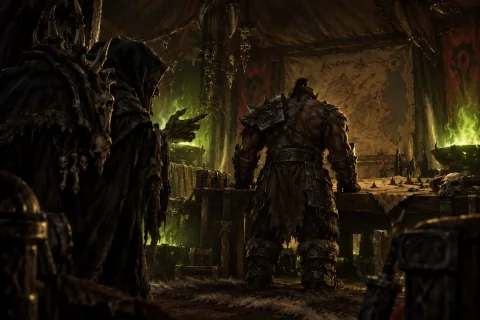
To him, the Horde was not a community where all clans joined their wills equally. On the surface, chieftains and warriors led the war, but behind them, the Shadow Council moved. The Gul'dan of the Warcraft II manual boasts that this organization manipulated the politics and judgments of the clans. Since this is the villain's own recollection, his exaggerations cannot be accepted as objective history. However, the structure of overlapping external military leadership and internal secret power becomes the key to understanding the Horde thereafter.
Blackhand was the Warchief the warriors looked to. Power and command stood at the forefront, and Gul'dan and the Council used that power for their own ends. The increase in clans following the Horde also meant an increase in the troops the Legion could use. It was a paradox where the solidarity of clans with different traditions proceeded under a plan to destroy those traditions.
The speed of the war changed even the lives of the Orcs. In the public excerpts of Chronicle, pressure is applied even to Durotan to have young warriors use the strange magic of the Warlocks. In the face of the goal to quickly create troops needed for the battlefield, even the time a child needed to grow and learn was not protected. The justification of preventing a common crisis was consuming the future of the community first.
Durotan doubted the war with the Draenei, but doubt alone could not keep his clan safe. Resisting the Warchief's command would endanger not only himself but his clan. The neighbors he had seen and the faces of the enemies demanded in war were different. This is why it cannot be said that every Orc fighting within the Horde believed the same thing. That difference is revealed again when the new Horde looks back on its past.
Chapter 4: The Final Counterattack of the Elements that Guarded the World
Fel magic did not act only at the moment of killing an enemy. It seeped into the ground, tormented the elements, and damaged the relationship the Orcs had with their world. Originally, shamanism on Draenor was not just a tool to draw out needed power. It was a belief that the lives of ancestors, elements, and clans were connected. When that connection was damaged, a void much larger than losing a single combat skill was created.
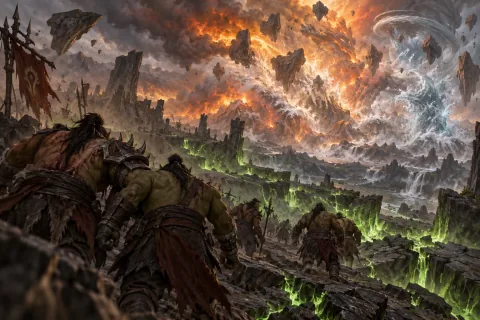
Chronicle shows that the elements gathered their remaining strength to form the massive entity Ku'rok, attempting to stand against the Orcs who were defiling the land. It is a scene where the very elements of the world appear as enemies before the claim that the Horde is fighting for its world. What the Legion's plan twisted was not just diplomatic relations. The relationships that had guarded the world were being turned to destroy each other.
The Orcs, who had distanced themselves from the elements while accepting the power of the Warlocks, gradually entered a different order. That order showed the desired power first and hid what the price would be. The Orcs became stronger, but their freedom to determine the source of that power diminished. Even as the responses of the stone, wind, and water that usually surrounded their lives disappeared, the war did not stop.
The wounds suffered by the elements and the traces of shadow magic remain until the later Outland era. The reason one cannot easily say the Horde won in this installment is that the land that served as the foundation for that victory was suffering damage that would be difficult to recover from. Military power gained by damaging the life of one's own land eventually erodes the future of living on that land.
Chapter 5: The Cup Grom Lifted
The blood of Mannoroth was the final device to complete the binding. The Legion's mighty Pit Lord was summoned to Draenor, and Gul'dan offered that blood to the Orcs. In the public excerpts of Chronicle, the true source of the green liquid in the cup is not known. The explanation that the beings who taught the Orcs new magic were trying to give them greater power came first.
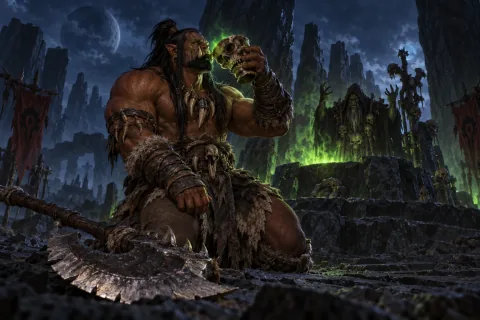
Because of this, the ritual was not a choice where the conditions were fairly disclosed from the start. What was heard to be the power to protect the clan and win the war was a means to bind their wills to the Legion. The price that was not visible at the moment of accepting the power at hand would follow every battle that used that power.
Grommash Hellscream drank the blood first. His choice did not end with the decision of the Warsong. As other Orcs followed, the power of the Legion entered deep into the Horde. The power that surged in the warriors and the extreme bloodlust were not separated from each other. As the ability to strike down enemies grew, the room to stop the fighting disappeared.
A warning was passed to Durotan not to follow the blood ritual. There were Orcs like Durotan and Orgrim who did not drink the blood directly. However, not drinking directly and avoiding the corruption of the world were not the same thing. Chronicle explains that the fel energy spreading from the Orcs who drank the blood seeped into the Orcs nearby, eventually turning even their skin green. One should not judge that every green Orc lifted the cup themselves.
The body changing from brown to green is a trace of this history. The Orcs could no longer protect themselves by the boundaries between clans alone. The chains of the Legion began in a single ritual but spread to the entire life lived on the same land and in the same army. This is why the cup Grom held must be remembered until the later Kalimdor story. Breaking those chains requires another sacrifice much later.
Chapter 6: Cities Fell and the Last Wall Remained
The Draenei settlements were isolated one by one. After Telmor, Karabor, and Farahlon fell, more was at stake in Shattrath. It was not just the survival of one city, but the future of the people who called Draenor home after a long escape. Even for them to set out on the road again, someone had to hold the gaze of the pursuers.
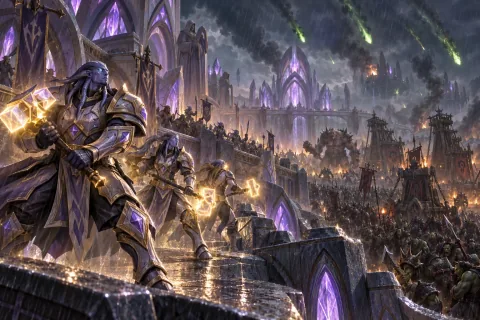
The choice to hide the group that would survive and hold out in the last city was horrific in itself. The defenders at the front knew that their defeat could hide the survival of the refugees. Only if they believed the Horde had finished off the Draenei would there be a chance to stop the hunt for those in hiding. They stood on the walls to protect the remaining time of others rather than for victory.
The Gul'dan of Warcraft II says the Draenei were destroyed without a trace. However, the history of Velen and the survivors overturns that boast. The words of the perpetrator who thought everything was over and the stories of those who had to live again in a world they thought had ended cannot be the same. One must distinguish those perspectives even when reading official materials together.
While the race that had fled in search of salvation faced the threat of extinction again in their new home, the warriors of the Horde followed the justification of a fight to save their own world. It was the Legion's lies that created the gap between the two sides looking at the same war. However, the fact that those lies existed does not absolve the responsibility for the actual massacres and destruction. The process of the Orcs finding a different life later cannot be read without knowing this past.
Chapter 7: Shattrath, a Night Without Light
The official short story Unbroken shows this fight through Nobundo, the last defender of Shattrath. He was still a healthy Vindicator, defending the walls with a crystal hammer and the power of the Light. The attacking army included not only Orcs but massive Ogres and siege equipment. Even when the defenders saved one person, the next attack surged forward, and the walls and gates could not hold in the end.
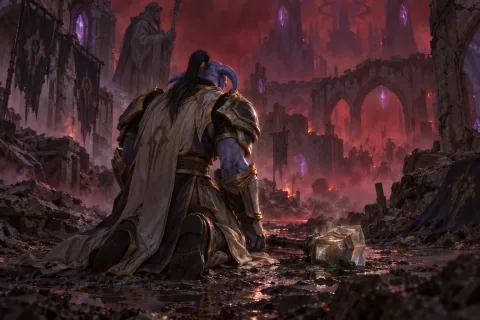
Burning debris from the Warlocks fell, and a red mist spread to the city streets below. Nobundo lost the power to call upon the Light while fighting in that mist. Even after surviving beneath the broken walls, he carried the memory of failing to save other survivors. The defeat shown by the story is not just physical wounds. It is the experience of the power that allowed him to believe in who he was and the people he tried to protect disappearing at the same time.
The fall of Shattrath did not mean all Draenei had disappeared. Those who were hiding survived in scattered refuges. Nobundo returned among them, but the bodies and minds of those exposed to the mist continued to change. Their kin feared them and separated them, and the name 'Broken' was given to the wounded survivors. The aftereffects on other survivors, including Akama, also remained.
Beneath the event recorded as the Legion's victory, there was both the loss that would continue for many years and a new beginning. The path for Nobundo to hear the voices of the world again does not open immediately after this war ends. His individual character section continues with the stories of survivors Kurein, Rohlk, and Akama, the collapse of Draenor, learning from the elements, and Velen's support. This is because life after escaping the war is also part of this narrative.
Chapter 8: An Army Without Enemies, A Dying Homeland
The Horde, bound by bloodlust, could not return to a peaceful life after striking down the Draenei. Just because they lost their old common enemy did not mean the power and destructive impulses received from the Legion disappeared. The clashes between clans appearing in Gul'dan's recollections reveal an army created for endless war failing to find a life after the war.
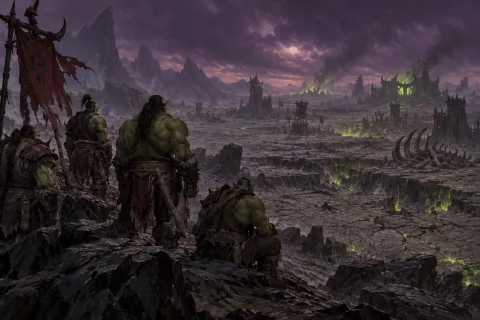
Draenor also could not regain its former abundance. The land damaged by fel magic and the wounds of the elements told a different story from the army's victory. Although they gathered the clans under the justification of saving this world, the conditions to continue living in that world had already collapsed. The hunt to find the surviving Draenei and the time the clans spent fighting over their own future overlapped.
Here, one must not bundle all destruction into a single moment of explosion. The Draenei war, the fel corruption, the opening of the Dark Portal, and the later event where Draenor itself is shattered by Ner'zhul's portals are different stages. The Draenor of now is becoming sick but is not yet a shattered world like Outland. Each stage leads to different choices and different results.
The next path the Horde would look toward was outside its own world. Meanwhile, on Azeroth, Medivh, the successor to the Guardian we examined earlier, was in Karazhan. When the portal between the two worlds opens, the power that created the massacre on Draenor and the passage for invasion long prepared on Azeroth meet. Behind that portal where the war of the human kingdoms begins, there are already people who have lost their homes in another world.
The first war of Warcraft is thus placed upon more than two tragedies. The Orcs come as an invading army wanting a new land, but the land they left was sickened by the Legion's lies and their own war. The flight of the Draenei is hidden from the stage for a moment but does not end. And the next paths that Durotan and Orgrim, Grom and Gul'dan will choose will differ even within the same Horde.
Reading by Names and Relationships
Kil'jaeden: Leader of the Burning Legion. He pursued Velen and the Draenei and turned the Orcs of Draenor into his own army.
Ner'zhul: Shaman of the Shadowmoon clan. He followed a false voice that approached in the form of his dead wife Rulkan, then belatedly doubted its identity. The process of becoming the Lich King is a much later event.
Gul'dan and the Shadow Council: The Warlock and organization that bound the Horde to the Legion's goals through fel magic and secret rule. Distinguish between the Gul'dan of the alternate timeline and the original character's actions.
Blackhand: Warchief of the first Horde. An important figure for understanding the rule where front-line military leadership and Gul'dan's hidden power overlapped.
Grommash Hellscream and Mannoroth: The Warsong leader who drank the blood first and the Pit Lord who enslaved the Horde with that blood. A relationship that meets again in Kalimdor later.
Durotan and Orgrim Doomhammer: Orcs who built a friendship beyond their clans. Their way of dealing with the blood ritual and the Horde leadership was not the same as other leaders.
Nobundo and the Broken (Krokul): The Shattrath defender and the Draenei changed by the corruption of war. Read by connecting physical changes, exclusion by their kin, and the new life found through the elements.
Related Public Excerpts to Read Together
The Escape from Argus where the Legion's obsession began: /ko/community/tm-warcraft-saga-part022-20261008
The world where Orcs and Draenei lived, the ancestors and Oshu'gun: /ko/community/tm-warcraft-saga-part023-20261008
The Guardian prepared on Azeroth and the tragedy of Karazhan: /ko/community/tm-warcraft-saga-part021-20261008
Official Materials and Scope of Confirmation
Confirmation Date: October 8, 2026 (UTC). This was written based on settings and events confirmed in the official public materials below. Public samples and setting introductions were only checked for that scope, and it is not indicated that the entire book was read. Illustrations are AI reconstructions, not official images.
World of Warcraft Chronicle Volume 2 — Authorized Public Preview
The Library — Rise of the Horde
Burning Crusade Classic: The Story So Far
comments 0