
Recommended Game Story · Shin Megami Tensei V: Vengeance Part 17
Chapters in this story
Canon of Vengeance · The Tears Gathered by the Qadistu
Spoiler Warning: This series covers the Canon of Creation and the Canon of Vengeance of Shin Megami Tensei V: Vengeance, including all six major endings. Both paths and their respective endings are distinct alternatives. This is not a transcription of the original game's dialogue or a novelization, but an original commentary and critique that interprets character choices and emotions based on key events. Unstated inner thoughts are distinguished as interpretations, and illustrations are AI reconstructions based on public materials.
The Canon of Vengeance in Shin Megami Tensei V: Vengeance constructs a narrative where mythological archetypes intersect with modern tragedy, beginning with the appearance of the Qadistu. Composed of Naamah, Eisheth Zenunim, Agrat bat Mahlat, and Lilith, they each seek to reshape the world through different logics of temptation and destruction. The tears they gather symbolize the repressed history of those who have resisted the order of God. The cooperative relationship Yoko forms with them reveals how the justification of vengeance clashes with individual moral hesitation. This analysis explores the meaning of vengeance through the rituals of destruction constructed by the Qadistu and the inner turmoil of the characters caught within them.
Chapter 1 · The Vengeance of the Four Demonesses and Yoko's Hesitation
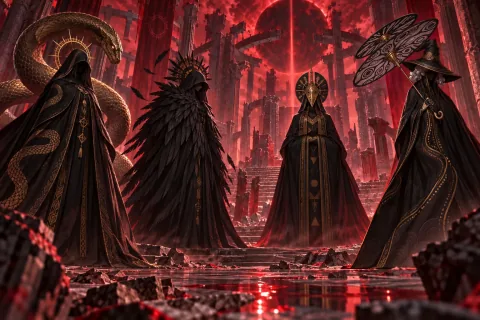
The four entities that constitute the Qadistu possess distinct mythological origins and methods of destruction. Naamah represents temptation, Eisheth Zenunim the plundering of souls under the guise of salvation, Agrat bat Mahlat leads the armies of destruction, and Lilith oversees their collective plan. While they share a common narrative of having been oppressed by the order of God, their methods cannot be lumped together as the same level of evil. Their individual goals and means intertwine to form the alliance known as the Qadistu.
During the final confrontation in Shinjuku, Lilith announces her cooperative relationship with Yoko and identifies her as the core of their plan. However, Yoko refuses Lilith's order to attack her companions. This clearly demonstrates that Yoko is not a tool blindly following the ideology of the Qadistu. Her refusal stems from the ethical judgment that the justification of vengeance cannot validate the sacrifice of others, forcing one to question whether the self-description of being a victim of oppression justifies the sacrifice of someone else.
The Qadistu define themselves as victims of oppression and claim the legitimacy of their vengeance. However, the self-description of being a victim cannot serve as a basis for taking the sacrifice of others for granted. Yoko's act of refusing the order points to the moment where the justification of resisting oppression transforms into another form of violence. This raises the question of whether vengeance is a legitimate form of resistance or merely a cycle that swaps the positions of perpetrator and victim.
Yoko seeks vengeance with the help of the Qadistu's power, but she does not agree with the cruel means they demand. This contradictory position makes her a multi-dimensional character beyond a simple collaborator. She desires vengeance but refuses to pay the price of losing her humanity. This suggests that the Qadistu's plan is cracking due to the variable that is Yoko, and it becomes the key driving force that maintains the tension of the Vengeance narrative.
The confrontation between the Qadistu and Yoko illustrates the clash between mythological vengeance and human ethics. The overthrow of the world sought by the four demonesses does not align with the direction of vengeance Yoko aims for. As Yoko refuses orders and begins to walk her own path, the Qadistu alliance begins to crumble from within. This process clearly reveals the weight of the act of vengeance and the moral dilemmas that arise during the process.
Chapter 2 · The Resurrection of Tiamat and the Loss of Aogami
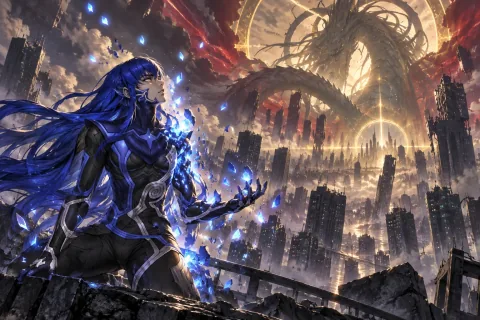
The Qadistu show a meticulous nature, utilizing even their own defeats for their rituals. They intend to use the Nahobino as a sacrifice for Tiamat to collapse the order of God and summon the chaos of the beginning. This ritual is an event that shakes the foundation of the world, going beyond a simple battle. It is revealed that the Qadistu included even their own destruction as part of the plan, and the player confirms the tragic nature of the Vengeance path in the face of this overwhelming will for destruction.
Although the protagonist survives after the ritual, Aogami is absorbed by Tiamat. Having lost the voice that had been with him since they joined hands in Da'at, the protagonist, left as a human, can no longer fight in the same way. Even if one knows of a future return, the severance at this point cannot be taken lightly. The fact that a companion who constantly responded in the face of danger has disappeared makes the loss concrete, more so than the power of a warrior who knows everything.
When Shinjuku is destroyed, Nuwa dies while protecting Yakumo. It is Yakumo who survives; the two characters do not die together in this place. The tension of Yakumo having accompanied Nuwa despite hating demons gains a new weight after this event. The result—that the being he called a tool protected his life—makes him look back on whether the relationship he had described and the relationship he had actually relied on were the same.
The point where Yoko's original memories and the purpose of her vengeance begin to be revealed is a turning point in the narrative. Why she cooperated with the Qadistu, and who the true target of her vengeance was, are slowly brought to light. Yoko's past is the key to explaining her current actions, showing how the pain she has endured drives the current drama of vengeance. Now, Yoko faces a situation where she must break free from being a tool of the Qadistu and complete her vengeance by her own will.
The resurrection of Tiamat is the prelude to the climax of the Vengeance path. The tears gathered by the Qadistu return as a wave engulfing the world. The loss of Aogami and the death of Nuwa prove that the price of vengeance is harsh, but at the same time, the will they left behind becomes the strength that sustains the protagonist and Yoko. Passing through these tragic events, the Vengeance path moves beyond a simple narrative of destruction into a drama that deals with the choices of the characters and their consequences.
Scope of Materials and Interpretation
As of October 16, 2026 (Bangkok), official work and character introductions have been cross-referenced with the ending, character, and quest materials below. Official introductions were checked only for the scope of disclosure, and fan wikis and walkthroughs are distinguished as separate materials. This is a text for an overview of major events and original critique, not a reenactment of all dialogue or gameplay scenes, nor an official novel. Optional quests and developments by version/path are not consolidated into facts common to all playthroughs.
Megami Tensei Wiki — Comparison of Yoko's background and path-specific choices
Megami Tensei Wiki — Background of Tiamat and the Creation system
comments 0