
Recommended Game Story · Shin Megami Tensei V: Vengeance Part 9
Chapters in this story
Canon of Creation · The Future Viewed by Three Pairs
Spoiler Notice: This series covers the Canon of Creation and the Canon of Vengeance in Shin Megami Tensei V: Vengeance, including all six major endings. The two paths and their respective endings are distinct alternatives. This is not a transcript of the original game's dialogue or a novelization, but an original commentary and critique that reads the choices and emotions of the characters based on major events. Unstated inner thoughts are distinguished as interpretations, and illustrations are AI reconstructions based on public materials.
As the Canon of Creation in Shin Megami Tensei V reaches its climax, it poses the fundamental question of who should hold the reins of the world, presenting three clear paths before the protagonist, the Nahobino. After defeating Metatron in the Temple of Eternity, the player faces the divergent visions of the future held by three pairs of characters: Abdiel and Ichiro Dazai, Tsukuyomi and Yuzuru Atsuta, and Nuwa and Shohei Yakumo. These pairs go beyond simple factional divisions, representing distinct value systems: the Order of God, the Governance of God, and Human Independence. This installment analyzes the choices these pairs make for their respective beliefs and what those choices mean for the survival of the world and human dignity. Examining the responsibilities borne by each character, who their envisioned paradise is truly for, and the ethical costs involved, presents the player with a weight far greater than a simple choice.
Chapter 1 · The Temple of Eternity and Human Rights
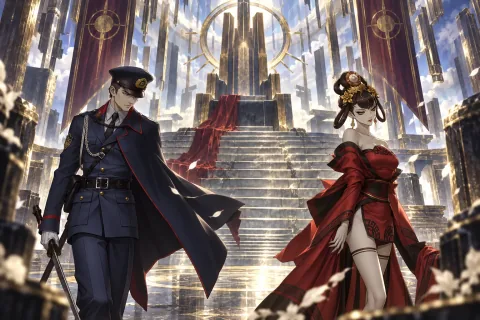
The Temple of Eternity is the turning point where the initiative for creation is decided. The three paths laid before the Nahobino after defeating Metatron are not merely factional choices, but philosophical questions about how to reshape the foundation of the world. Abdiel and Dazai, Tsukuyomi and Yuzuru, and Nuwa and Yakumo each propose different principles of governance and offer different answers to who should determine the fate of humanity. Their confrontation is the point where three value systems—the Order of God, the Governance of God, and Human Independence—collide.
The path proposed by Nuwa and Yakumo is to create a world solely for humanity, excluding the influence of gods and demons. Yakumo argues that humanity must forge its own destiny without the protection or interference of gods. This is a radical approach that rejects the existing system subordinate to the Order of God. However, this choice cannot be definitively labeled as the only answer that justifies a world of survival of the fittest or guarantees human dignity. There is no guarantee that a world without divine intervention will necessarily be a peaceful paradise for humanity.
Tsukuyomi and Yuzuru aim for an orderly world that maintains stability in human society by borrowing the wisdom of the gods. Through his fusion with Tsukuyomi, Yuzuru seeks to utilize divine power for human governance. This is an attempt to end the chaotic reality of Da'at and establish a system where humanity enjoys comfort under the protection of the gods. However, a fundamental question remains: is entrusting human agency to the Order of God true independence, or is it eternal subordination to a divine governing system?
The world pursued by Abdiel and Dazai is based on conservative values that uphold the absolute Order of God. As an angel who executes the will of God, and as a human who follows that conviction, Abdiel and Dazai are devoted to the restoration of order. For them, the survival of the world depends on following the will of God, and any sacrifices or violations of taboos that occur in the process are justified as inevitable means for the sake of order. Dazai's blind faith reveals the fragility of humanity, which seeks to find the meaning of its existence within the grand framework of the Order of God.
When comparing these three pairs, the key lies in the boundaries of whom they seek to protect and whom they seek to exclude. Yakumo attempts to liberate humanity from divine rule but destroys the existing order in the process; Tsukuyomi attempts to protect humanity but restricts their freedom. Abdiel attempts to maintain order but alienates humanity from the beneficiaries of that order. Their confrontation possesses a complex ethical layer where neither side can be evaluated as absolutely right or wrong. The player must listen to their logic and choose the value of the future they dream of.
The three paths encountered at the Temple of Eternity are the final choices regarding what kind of world the Nahobino will create. This choice is not merely a game branch, but a philosophical projection regarding the essence of humanity and the role of God. Whether one chooses the strength of Yakumo, the stability of Tsukuyomi, or the order of Abdiel, the result will shake the foundations of the world, and the responsibility for that outcome rests entirely with the player. The futures presented by these three pairs make us rethink the order and freedom of the real world through the collision of different values.
Chapter 2 · Those Who Cross Taboos for Faith
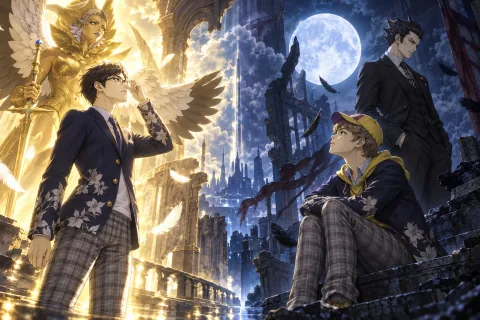
Taboos are safety devices for maintaining the Order of God, but paradoxically, they are also destroyed by those who seek to uphold that order. Abdiel demonstrates the contradiction of breaking the taboo of obtaining the Nahobino's power herself in order to protect the Order of God. Dazai finds certainty in absolute order through Abdiel and supports it. It should be noted that the four endings that unfold subsequently are parallel alternatives, not a continuous sequence of events. The belief that the goal of order is superior to the means erodes its own legitimacy, and Dazai's blind faith leads to the irony of accelerating the collapse of order.
Yuzuru's choice is also another form of determination that crosses taboos. In the process of fusing with Tsukuyomi and accepting divine power, he attempts to utilize the wisdom of the gods while maintaining his human ego. This is an attempt to blur the boundaries between god and human to create a new order, but it simultaneously foreshadows the identity crisis that humans will face by encroaching on the divine realm. The agony Yuzuru displays projects the inevitable pain humans experience when wielding divine power and the changing essence of humanity, forcing us to ask whether borrowing the power of gods is truly a path for humanity.
While their choices have different goals, they share the logic of sacrificing current taboos for a greater good. For Abdiel, it is the Order of God; for Yuzuru, it is human well-being; and for Yakumo, it is human independence. However, the sacrifices and exclusions that occur in this process transform the world in different ways. Abdiel's path aims for a world of strict control, Yuzuru's path for a new order where gods and humans are fused, and Yakumo's path for a rough world of freedom where divine influence is eradicated.
As the player watches their decision-making process, they experience how beliefs lead to actions and how heavy the consequences of those actions are. In particular, the scenes where companions break taboos for their respective beliefs show that they are not just characters in a game, but three-dimensional beings who agonize and struggle for their own values. Watching their choices demands more than simple observation from the player; it requires reflection on what choice I would have made and whether I could bear the weight of that choice.
The taboo violations shown by each character prove how desperate the values they wish to protect are. Abdiel's blind loyalty, Yuzuru's sense of responsibility, and Yakumo's strong will are all attempts to transcend human limitations. However, the results differ drastically depending on whether that attempt is made within the Order of God or destroys it. Through their actions, the player comes to understand what the Order of God means to humanity and what price must be paid when humans resist or conform to it.
Their choices pose the question of what faith is to us. Believing in the Order of God, believing in human potential, or believing in the wisdom of the gods. All these beliefs lead to crossing taboos in their own ways, and as a result, they determine the future of the world. The endings of the Canon of Creation are the results created by such different beliefs colliding and fusing, and the player's own faith is tested in the process. Through their choices, we have time for serious contemplation on the relationship between god and human, and how humans should find their own path in between.
Scope of Materials and Interpretation
As of October 16, 2026 (Bangkok), official work and character introductions have been cross-referenced with the ending, character, and quest materials below. Official introductions were only checked for the scope of disclosure, and fan wikis and walkthroughs are classified as separate materials. This is a text for an overview of major events and original critique, not a reenactment of all dialogue or gameplay scenes, nor an official novel. Choice quests and developments by version/path are not consolidated into facts common to all playthroughs.
Megami Tensei Wiki — Comparison of the World and Events of Shin Megami Tensei V
SEGA·ATLUS Official Story and Character Introduction
PowerPyx — Six Endings and Additional Branch Conditions for the Canon of Creation
comments 0