
Operator Recommended Game Story: Warhammer 40,000 Part 9
Chapters in this story
- From Thunder to Legion: New Soldiers and Erased Predecessors
- Chapter 1: What the Emperor's Laboratories Demanded
- Chapter 2: The First Legion, A Name Created Instead of a Single Home
- Chapter 3: Order That Endures Longer Than Strength
- Chapter 4: The Next Destination Indicated by Armor
- Chapter 5: How the Dead Brother Leaves the Next Brother
- Chapter 6: The Mountain of Records, Ararat
- Chapter 7: The Golden Guardian and the Silent Advisor
- Chapter 8: Now the Army Turns Toward the Sky
- Names and Concepts in This Part
- Official Materials and Confirmation Scope
From Thunder to Legion: New Soldiers and Erased Predecessors
Spoiler Notice: This article covers official records and lore regarding the latter stages of the Unification Wars, the early Legiones Astartes, and the exit of the Thunder Warriors. The overall progression of the Great Crusade and the whereabouts of the Primarchs will follow in subsequent parts. Stories described as uncertain in public materials are distinguished from confirmed history.
The armies that conquered Terra were not the same as those destined to conquer the stars. Surviving in the ruins of a single world required different conditions than enduring long voyages and waging war under varying atmospheres and gravities. The horizon the Emperor gazed upon did not stop at the mountains of the earth. His armies were being remade to match that horizon.
The Thunder Warriors were the force that made the Unification Wars possible. The fact that a moment arrived when that force was no longer needed does not mean their sacrifices were rendered void. However, the birth of the Imperium did not promise a long life to those who had earned it. While new soldiers were born in laboratories and began calling each other brothers of a legion, the names of the warriors who fought first retreated into increasingly darker records.
Chapter 1: What the Emperor's Laboratories Demanded
The birth of the Space Marines did not end with recruiting strong humans and putting them in good armor. It was a complex transformation that involved creating gene-seed based on the Primarchs' genetic legacy and using it to cultivate new organs and abilities. The official Crusade public extract explains that there were numerous experiments and failures before the completed legions emerged. When we look only at the supermen of the battlefield in later years, the nameless bodies that led to their creation are easily forgotten.
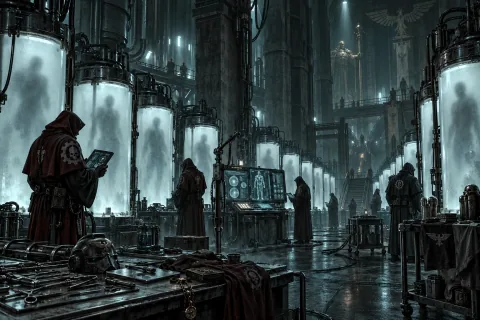
Some early test subjects were functional prototypes leading to the later Astartes. However, they cannot be definitively labeled as the exact same beings as the soldiers known today. Materials suggest that these early prototypes were crude and incomplete, and that the names and fates of many have vanished from the records. Just because stable results were achieved does not mean the sacrifices made beforehand were any less significant.
Terra's environment was also a problem. In a world riddled with radiation and genetic contamination, there were not many candidates of suitable age and physical condition who remained untainted. The Emperor's plan reached out to the youths of conquered enemies, those secured from slave traders, and even the human tithes of later incorporated regions. The structure of conscripting human bodies as resources for the grand goal of saving humanity was present from the very beginning.
If one were to turn this passage into a single heroic training story, the darkness of the work would vanish. The achievements of the new legions were clear, but the cost of those achievements was not always met through the freely given consent of the parties involved. There was a vast gap between the power planning the future of the galaxy and the people who had to offer their bodies for that future.
Chapter 2: The First Legion, A Name Created Instead of a Single Home
The First Legion served as an important prototype for the legions that followed. Their early soldiers did not come from a single ethnicity or city. Traditions gathered from various regions were brought into the legion. Infantry from the Frankish plains, warriors of Albia, the mobile warfare knowledge of the Anatolian steppes, and the brutal fighting styles of Scandia were blended within a single new military organization.
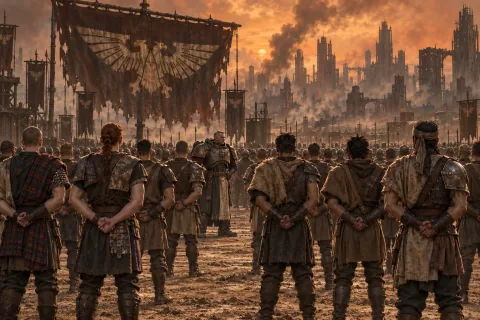
However, this diversity did not mean they maintained loyalty to their original homes. Early soldiers were required to set aside their old names and regional affiliations to embrace a new sense of unity. Records remain of them taking the names of ancient heroes like Gilgamesh or Hercules. Bestowing names that had already become myth upon living individuals was a way of discarding the past while simultaneously selecting a different past to forge a new identity.
The epithets surrounding them carried the image of the 'Uncrowned Princes.' This did not literally mean they were princes ruling individual nations. It was a name imbued with the status granted to the Emperor's new soldiers and the consciousness that they had to lead the way for the path of the legions to come. These same soldiers became brothers to their peers and beings who inspired both awe and fear in ordinary humans.
One should not depict the legion that would later be called the Dark Angels as having the knightly culture of Caliban and a completed organization from this point. The return of the Lion and the incorporation of Caliban were later changes. What was forming now was a Terran legion that had absorbed the war knowledge of many homelands, and their daily lives were defined more directly by the Emperor's plans and laboratory training than by the genetic father they had not yet found.
Chapter 3: Order That Endures Longer Than Strength
If one asks only whose fist is stronger to distinguish between the Thunder Warriors and the Astartes, an important part is missed. Official public settings acknowledge that the personal strength of a Thunder Warrior might be greater, but contrast it with their instability and the limitations of organized cooperation. The Astartes had to be not just weapons that caused larger explosions, but an army that moved continuously.
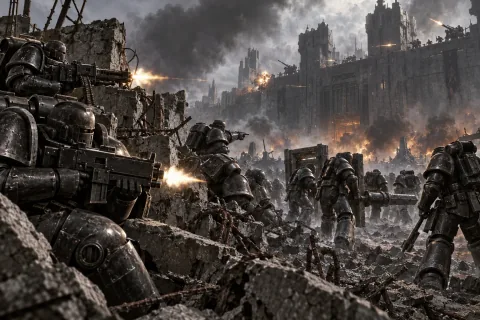
Within the early First Legion, 'Hosts' specializing in specific tactics emerged. A Host was different from an organization divided only by the boundaries of companies and commanders. It was a method where soldiers with the same knowledge participated in advice and command across various combat organizations. Knowledge of sieges, the operation of specific weapons, and techniques for responding to unfamiliar enemies were gathered and branched out through experience.
In public records, the early Hosts were very diverse, and they were organized into more focused forms as time and war progressed. As other legions grew, more suitable areas of expertise were created for them. Not all experiments of the First Legion were maintained permanently. Some methods lost their utility, and others could not withstand the cruelty of actual battlefields. Tactics were refined through the results of those who returned alive.
This experience led to principles that would influence the organization and warfare of the legions in the future. More terrifying than a single victory is a system that can repeat victory. War reproduced through logistics, training, command, and division of labor was suited for the galaxy-scale conquest the Emperor aimed for. The new legions that appeared in the latter half of the Unification Wars were already testing the framework of the next war.
Chapter 4: The Next Destination Indicated by Armor
The names of the armor also retained the changes of the era. Mark I Thunder Armour was made for the wars of Terra. The power armor, concentrated on the upper body, was powerful, but it was not designed as a fully sealed piece of equipment. As the environment in which a warrior had to fight changed to the exterior of ships without atmosphere or to alien planets, the range that needed protection also changed.
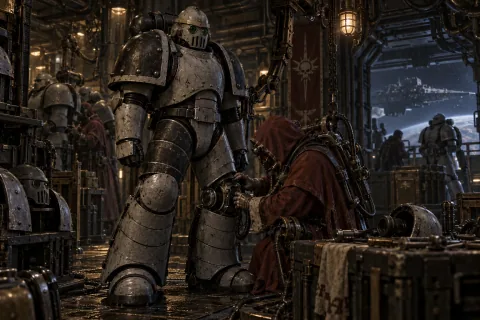
Mark II Crusade Armour was a change suited for soldiers heading into the galaxy after the conquest of the Sol System. Official armor introductions explain its airtightness, more sophisticated full-body armor, and reinforced power units. The overlapping curved armor and the structure that wraps the entire body did not just change the appearance of the armor. It expanded the range of protection for the soldier to fight and move in more environments.
Of course, technological advancement did not eliminate all maintenance problems. There were also issues with complex structures, heat generation, and difficulty of repair. The subsequently appearing Mark III focused on front-side defense reinforcement for situations like narrow corridors and shipboard combat. While it protects the front more thickly, the conditions for the back are different. Just because a new number is attached does not mean it simply replaces the previous armor in all situations.
If the reader remembers this equipment, it is easier to understand what kind of battlefield the soldier's body was designed to endure when reading scenes of the Great Crusade. Drawing a warrior wearing Thunder Armour with the armor of the later Primaris, or giving all legions the same latest equipment, erases the differences of the era. This is why the illustrations in this series also prioritize confirming the format and era of official models.
Chapter 5: How the Dead Brother Leaves the Next Brother
Gene-seed is not a resource needed only at the beginning of a legion. A genetic legacy that leads to the birth of the next soldier remains within the soldier's body. Later Imperial official commentary explains that Apothecaries approach fallen brothers even during battle to recover the progenoid glands. Along with recovering armor and weapons, the soldier's body itself carries the future.
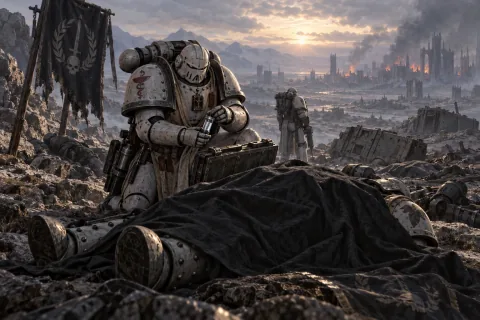
This does not mean the systems of all periods were the same. The gene-seed tithes paid by the chapters of the modern Imperium and the troop controls after the Second Founding cannot be transferred to the legion systems of this time, when the Unification Wars were still ending. However, one can see the connection that the same genetic resources were used within different administrative and military systems across eras.
When the legacy of the body is tied to the continuity of the army, death on the battlefield also changes. The loss of a single soldier overlaps with the loss of the potential for the next generation that would have followed from that soldier. The duty to protect a brother does not only point to the living. One must protect the future of the legion even from a body that has already ceased to breathe. The wars of the Space Marines are connected to a time longer than an individual life in this way.
Chapter 6: The Mountain of Records, Ararat
Beside the growth of the new legions is the sudden disappearance of the Thunder Warriors. Official materials mention various legends and theories regarding them. Stories of nomads around Mount Ararat tell that survivors returning from victory were attacked by an army wearing gray armor and bearing the same markings. It is a tradition that makes one doubt the end of the meritorious, different from the heroic end-of-war stories.
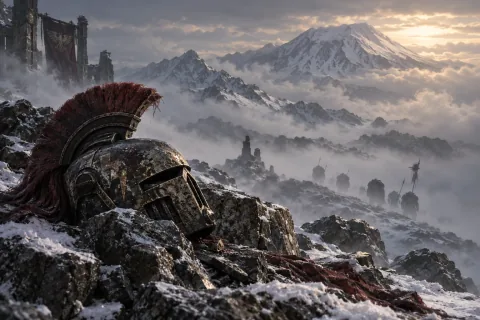
The possibility that that army was the First Legion is suggested even within the materials. However, the same public section clearly adds that there is no evidence to prove this. If one writes only the possibility as a confirmed event in the Imperial Palace records, omitting the explanation that there is no proof, it reverses the important meaning of the source. This section distinguishes between the traditions regarding Ararat and the confirmed actions of the First Legion.
In anecdotes from the latter half of the Great Crusade, it is said that the First Legion persistently tracked down the Thunder Warriors who survived and left Terra. This can be a clue to interpreting the past, but a clue is not the answer to every riddle. We must examine more testimonies left by different records and works. That is why we read together who said what, and how confident the narrator of the official material is about it.
This uncertainty does not make the story weak. The process of how merits are recorded and erased itself reveals the character of the Imperium. The question of what place those who were needed for unification received in the next plan remains longer than the question of who won. The exit of the Thunder Warriors makes that question unavoidable.
Chapter 7: The Golden Guardian and the Silent Advisor
The Emperor's wars did not consist only of new legions. Constantin Valdor fought alongside the Thunder Warriors at Maulland Sen and struck down the Priest-King. Official character introductions also confirm his suppression of the rebellion at Kandawire later on. However, this brief introduction does not prove every conversation Valdor had with everyone in every event. One cannot fill in the entire process of detailed conspiracies with only public novel introductions.
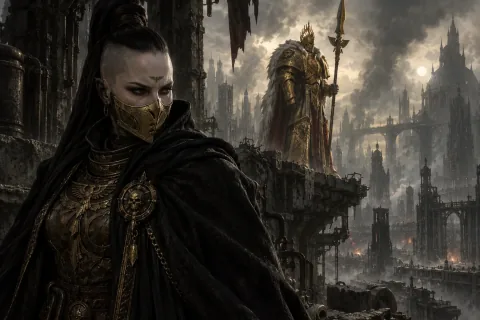
Another figure is Jenetia Krole, born in the Albia wasteland. Ostracized by people because of the rare trait of being a Pariah, she entered the ranks of the Imperium during the Unification Wars. The story that Valdor first discovered her is also expressed as a legend in official introductions. While the exact circumstances of the discovery are open, it is confirmed that her power played an important role in the latter half of the Unification Wars.
The power of warlords who traded with psykers or daemons was dangerous regardless of how strong the muscles and armor were. Around Krole, the power of the Warp subsided, and her existence became a special weapon against such enemies. A quality that was uncomfortable and avoided by ordinary people was accepted as a valuable ability in the Emperor's wars. One person's alienation met the Imperium's needs and gained a different position.
After the Great Crusade was declared, Krole was appointed as the Knight-Commander of the Anathema Psykana. She was given the mission to find and organize those like her, and they became known as the Sisters of Silence. This is why Valdor, Malcador, and Krole of later years cannot be seen simply as three decorative figures standing next to the Emperor. Military power, authority, and response to the Warp required people with different roles and different lives.
Chapter 8: Now the Army Turns Toward the Sky
New soldiers came from laboratories, and new tactics were tested on the battlefields of the Unification Wars. Armor was changed to go further. Those who responded to threats that could not be solved by physical strength also gathered around the Emperor. The unification of Terra was not an end point, but a starting point toward the lost worlds of humanity.
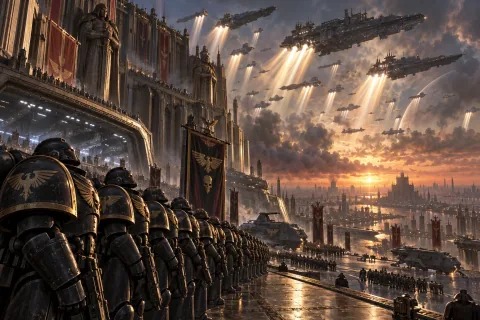
However, the genetic fathers of the legions were still scattered. Soldiers gained strength from the same legacy while fighting without knowing the person who created that legacy. The Great Crusade becomes a journey to find worlds, and at the same time, a journey for the Emperor to meet his sons again. With each meeting, the name, character, and direction of loyalty of the legion also change.
The next part continues with how the Primarchs were placed at the center of the Imperium's plans and how they grew into figures with lives on different worlds. Inside the army advancing toward a golden goal, the future of brothers who did not yet know each other was waiting. That future held both the glory of the Great Crusade and the catastrophe of the Horus Heresy together.
Names and Concepts in This Part
Legiones Astartes: Space Marine Legions of the Great Crusade era. Distinguished from the small-scale chapter system of later eras.
Gene-seed: Resources related to the Primarchs' genetic legacy and soldier enhancement. Later progenoid recovery and tithes are explained separately from the systems of each era.
Host: Specialized groups that shared tactical knowledge in the early First Legion. Not treated as the same completed form as the later Wings under the Lion.
Mount Ararat: The place where traditions regarding the end of the Thunder Warriors remain. Hypotheses stated as unproven in public materials are not changed into confirmed facts.
Jenetia Krole: An important Pariah commander of the Unification Wars and Great Crusade. Connected to the later Sisters of Silence.
Pariah: Those with the trait of suppressing Warp activity in their surroundings. Social alienation and the Imperium's military needs intersect.
Reading Order: Continues from the previous part on the Unification of Terra and the Battle of Samarkand. After the formation of the early legions, the Primarchs, Mars, and the Great Crusade await. Parts not yet released are not indicated with reading links.
Official Materials and Confirmation Scope
Confirmation Date: October 8, 2026 (UTC). Written based on settings and events confirmed in the official public materials below. Public samples and setting introductions were checked only for their respective scope, and it is not indicated that the entire books were read. Illustrations are AI reconstructions, not official images.
The Horus Heresy Book Nine — Crusade: official Dark Angels public extract
Saturnine lore focus: Who is Constantin Valdor?
comments 0