Key information
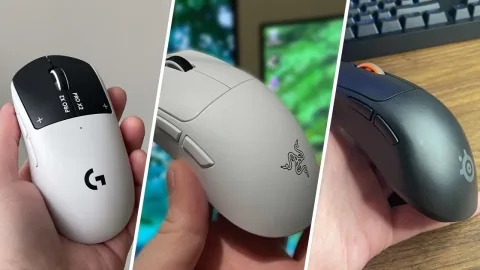
Major gaming hardware brands have introduced highly innovative features for competitive mice, driving significant technological advancements in the industry. Prominent 2026 releases include the Logitech G Pro X2 Superstrike priced at $180, the Razer Viper V4 Pro at $160, and the SteelSeries Rival Pro and Sensei Pro models, each costing $180, alongside a $200 X3 Superstrike.
These flagship releases feature distinct technological innovations. Logitech introduced haptic-inductive analogue clicks on its Superstrike, allowing users to adjust actuation points and utilize rapid triggers. Razer developed FrameSync for the Viper V4 Pro to synchronize sensor captures with the microcontroller unit, improving battery efficiency. Meanwhile, SteelSeries incorporated ultra-wideband wireless connectivity and true 8K polling into its mice.
Despite commanding very high prices, these top-tier devices offer exceptional build quality. The Razer Viper V4 Pro is described as practically flawless and cheaper than competing big-brand alternatives. However, early adopters faced rapid obsolescence when Logitech released an improved X3 Superstrike merely seven months after the initial launch.
While budget-conscious consumers can still purchase cheaper, high-performing alternatives from niche brands, big companies have successfully absorbed the financial risk to legitimize and market these new hardware advancements. Because internal components are typically developed with distinct third-party manufacturers, these technological innovations are expected to spread across the wider industry.