
Key information
During the early 1990s 16-bit console era, acquiring certain high-profile Super Nintendo games demanded a monumental financial effort. According to reports, bringing arcade blockbusters to home consoles required increasingly massive memory capacities and expensive high-end electronic components.
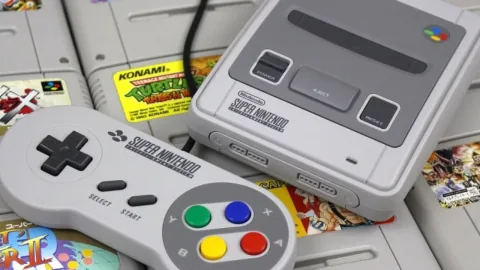
The technical complexity of ROM cartridges involved printed circuit boards, Mask ROM chips, and Nintendo's CIC antipiracy chip. Nintendo also maintained a centralized manufacturing monopoly, forcing third-party editors like Capcom to pay for cartridges entirely in advance, which guaranteed profits for Nintendo while transferring all financial risk to publishers.
In the French market of 1993, standard games cost around 400 to 450 francs, but titles like Street Fighter II Turbo launched at 549 to 590 francs. Larger 32-Megabit cartridges such as Super Street Fighter II reached 649 to 690 francs, representing a massive slice of monthly income equivalent to over 160 euros today.
The rigid cartridge model and financial risks ultimately changed with the optical disc era. Sony's PlayStation introduced CD-ROMs with vastly larger storage at a fraction of the pressing cost, lowering retail prices by the late 1990s.


