Key information
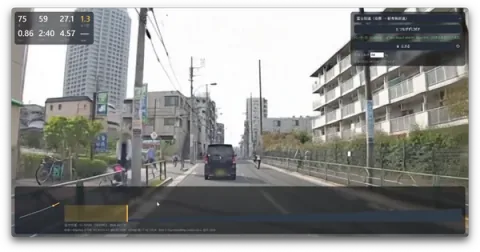
A developer has created a custom virtual cycling application that generates realistic route visuals using AI video generation models, including MiniMax H3 and LTX 2.5. By utilizing Mapillary street-level imagery as anchor points, the system generates video segments to bridge gaps between locations, allowing users to cycle through specific real-world routes from home.
The software functions by controlling video playback speed based on the user's pedaling power and cadence, captured via a smart trainer. To ensure smooth visuals, the system uses optical flow to measure frame-by-frame progress, mapping it against known distances between photos. If playback slows, the system employs frame interpolation to maintain visual consistency.
The setup requires a PC running Chrome to utilize Web Bluetooth for FTMS connectivity, as the system is incompatible with Safari on iOS devices. While the developer notes that generating high-resolution video can be time-consuming, the current workflow involves pre-generating segments to ensure a seamless experience during rides, rather than relying on real-time generation.
Compared to existing platforms like ROUVY or VZFit, this custom solution allows for specific, user-defined routes where high-quality footage might otherwise be unavailable. The developer successfully tested the system on routes including New York City and local Japanese streets, noting that the smart trainer accurately reflects terrain gradients, such as subtle inclines, during the virtual ride.