Key information
Achieving a balance between high-fidelity visuals and smooth frame rates is a common challenge for PC gamers. Not all graphical settings impose equal demands on hardware, as some options significantly impact performance while others offer minimal visual improvements relative to their heavy computational cost.
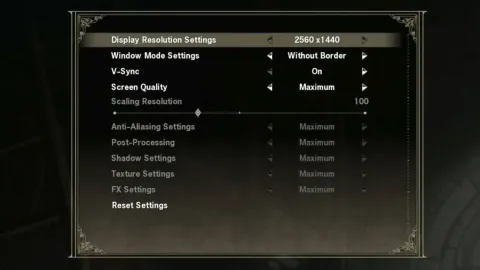
Shadow Quality and Volumetric Fog are major contributors to performance drops. High shadow settings require intensive real-time calculations, while volumetric effects like fog and smoke demand complex 3D particle processing. Reducing these to Medium or High levels can improve stability without drastically altering the visual experience.
Texture Quality and Anti-Aliasing also influence system stability. High-resolution textures consume significant VRAM; exceeding this capacity forces the system to use slower RAM, causing stuttering. Similarly, conventional Anti-Aliasing methods like SSAA or MSAA are resource-heavy, though modern upscaling technologies like DLSS, FSR, or XeSS offer more efficient alternatives.
Ray Tracing remains one of the most demanding features, often cutting frame rates in half and increasing component temperatures. For users prioritizing competitive, stable frame rates, disabling Ray Tracing is recommended, especially when not utilizing upscaling technology to mitigate the performance impact.