Key information
Display experts are currently working to restore the motion clarity once provided by CRT monitors, which modern LCD and OLED panels have struggled to match. Mark Rejhon, founder of Blur Busters, notes that while high-refresh monitors have improved, they still lack the natural phosphor fade and rolling scan characteristics of older CRT technology.
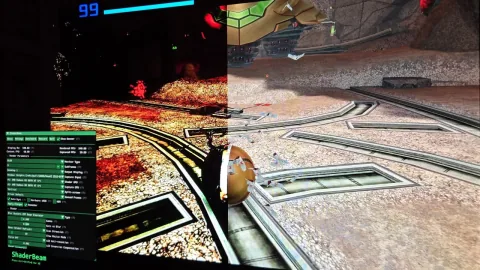
To bridge this gap, Rejhon and developer Timothy Lottes created an algorithm that simulates CRT behavior on 240+ Hz displays. This technique, implemented in the ShaderBeam tool by developer Mausimus, aims to reduce motion blur for 60 Hz content by recreating the visual effect of a CRT beam, allowing users to see fine details during movement that would otherwise appear blurred.
However, achieving this effect is technically demanding. Mausimus explains that ShaderBeam must operate without native support from Windows or GPU drivers, forcing it to rely on unstable workarounds like screen capture and complex multi-GPU setups to maintain timing. Users often face stuttering, flashing, and significant configuration challenges when attempting to synchronize the shader with their hardware.
Ultimately, the current implementation remains a niche, experimental endeavor. While impressive, the technology requires deep system-level integration to become practical. Experts hope that these efforts will eventually encourage Microsoft and hardware manufacturers to build native support for such display shaders directly into operating systems and GPU pipelines in the future.