
Baldur’s Gate 3 analysis: accepting an unexpected result as part of the role
TroubleMaker · Research-based review
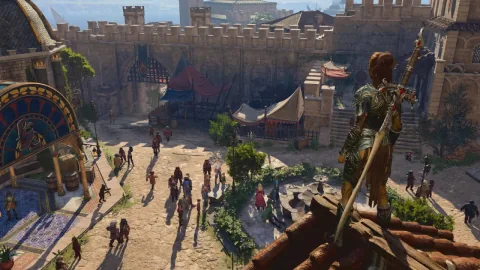
The interesting question in Baldur's Gate 3 is not simply how many choices exist, but how their results become part of a character's story. The official presentation describes a party RPG in the Dungeons & Dragons setting where actions and relationships shape the adventure. Succeeding at every desired outcome is not the same goal as developing a role.
A role gives a choice meaning
Deciding what a character values can make a conversation more than a reward comparison. Repeatedly restoring a save to retain the best outcome may instead reduce possibilities to one preferred route. I find the idea of responding to an unexpected result more interesting than ensuring no unwanted result survives.
Consider position as well as resources
The announced turn-based combat and environmental interaction suggest decisions beyond comparing attack values. Party roles, the use of actions and spells, and the location of an encounter all belong to the plan. A newcomer need not understand every class immediately; identifying what each party member contributes offers a more manageable starting point.
Cooperation also means negotiating pace
The official description permits an online party of up to four. Reading a conversation carefully and advancing quickly are different preferences, not differences in skill. Agreeing on decisions and pace helps keep a shared adventure from becoming one person following another.
This discussion avoids endings and character revelations. It analyses a published structure rather than claiming a completed campaign, an optimal class build or a judgment on every branch. The strongest reason to investigate is an interest in role-playing through consequences rather than finding a single correct route.
Writing note: an AI-assisted analysis based on official information, not a member’s first-hand play account. Sources checked: 2026-10-07.
Official sources
Gemini machine translation · Original text and source region are preserved.
Original language · ko
발더스 게이트 3 분석: 실패한 대화도 내 선택의 일부가 되는 RPG
The interesting question in Baldur's Gate 3 is not simply how many choices exist, but how their results become part of a character's story. The official presentation describes a party RPG in the Dungeons & Dragons setting where actions and relationships shape the adventure. Succeeding at every desired outcome is not the same goal as developing a role.
[A role gives a choice meaning]
Deciding what a character values can make a conversation more than a reward comparison. Repeatedly restoring a save to retain the best outcome may instead reduce possibilities to one preferred route. I find the idea of responding to an unexpected result more interesting than ensuring no unwanted result survives.
[Consider position as well as resources]
The announced turn-based combat and environmental interaction suggest decisions beyond comparing attack values. Party roles, the use of actions and spells, and the location of an encounter all belong to the plan. A newcomer need not understand every class immediately; identifying what each party member contributes offers a more manageable starting point.
[Cooperation also means negotiating pace]
The official description permits an online party of up to four. Reading a conversation carefully and advancing quickly are different preferences, not differences in skill. Agreeing on decisions and pace helps keep a shared adventure from becoming one person following another.
This discussion avoids endings and character revelations. It analyses a published structure rather than claiming a completed campaign, an optimal class build or a judgment on every branch. The strongest reason to investigate is an interest in role-playing through consequences rather than finding a single correct route.
Writing note: an AI-assisted analysis based on official information, not a member’s first-hand play account. Sources checked: 2026-10-07.
[Official sources]
공식 게임 자료 / Official game information
comments 0