Key information
NVIDIA previously restricted the FP16 and BF16 floating-point performance of GeForce RTX 20, 30, and 40 series graphics cards to differentiate them from professional-grade hardware. While this limitation does not impact gaming, it significantly reduces efficiency for AI-related tasks.
Developer Zagitta has successfully bypassed these software-based constraints using AI reverse engineering. By tricking the validation mechanism that limits data transmission frequency, the modification effectively doubles the AI computing performance of these GPUs without increasing power consumption or operating clock speeds.
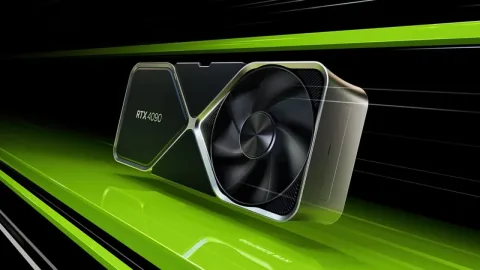
Performance gains vary by generation. The RTX 4090 sees its FP16 and BF16 efficiency rise to approximately 331.6 and 330.6 TF/s, nearing the performance levels of the RTX 6000 Ada. Meanwhile, RTX 30 series cards gain up to 80% efficiency, and RTX 20 series performance doubles.
The solution functions by injecting a verification bypass during system startup rather than modifying the GPU BIOS. While the risk of hardware damage is considered low, users should be aware that such modifications could potentially void warranties, particularly for newer RTX 40 series models.