Key information
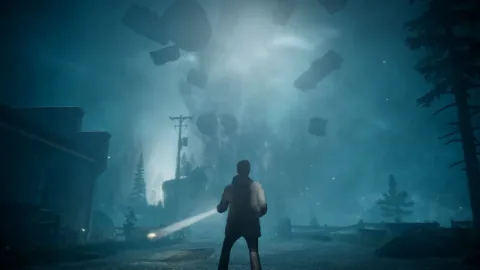
The original Alan Wake distinguishes itself through a unique design choice: the absence of a standard on-screen reticle. While third-person shooters typically rely on these markers for orientation and aiming, Remedy Entertainment opted to omit them, creating a sense of uncertainty that permeates the combat experience.
Combat mechanics in the game revolve around a two-stage process. Players must first use a torch to strip away the shadow armor protecting enemies before switching to firearms. Because the torch beam shifts dynamically within the 3D environment and aiming down sights consumes rare battery resources, players are often forced to fire their weapons without any visual assistance or zoom, heightening the tension during encounters.
This design choice is described as an unnerving experience that lowers player confidence and increases panic. While some players may find the lack of a fixed point of focus difficult, particularly those prone to motion sickness, the author argues that this quirk effectively immerses players in the game's atmosphere of unravelment.
The effectiveness of this approach is highlighted by contrast with the sequel. Alan Wake 2, released in a more modern era of accessibility, includes a traditional reticle. Despite Remedy developing more sophisticated action sequences in later titles, the original game remains distinct for its lack of handrails, which paradoxically helps the studio achieve its atmospheric goals.