Thông tin chính
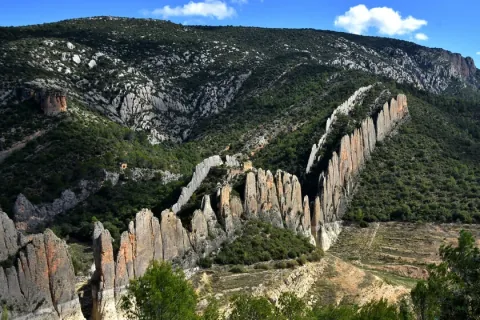
The Pre-Pyrenees region of Aragon features a unique geological formation known as the Chinese Wall of Huesca. This site, referred to as Roques de la Vila, consists of two massive limestone walls reaching up to 20 meters in height and extending 840 meters in length.
These structures were formed by tectonic plate movements during the Cretaceous period. Subsequent erosion from wind and water shaped the vertical rock layers, creating a corridor between the walls that served as a strategic defensive location during the medieval era.
Arnau Mir de Tost utilized the highest point of this formation to construct a castle. Historical documentation confirms the existence of this fortress by 1068, when it was donated to a nearby abbey. The site remained a military installation for centuries before eventually falling into ruin.
The surrounding area includes the ruins of the village of Finestras, which was abandoned over time and impacted by the construction of a reservoir. Today, the combination of these ruins and the ancient rock formation remains a notable landmark in Aragon.