Key information
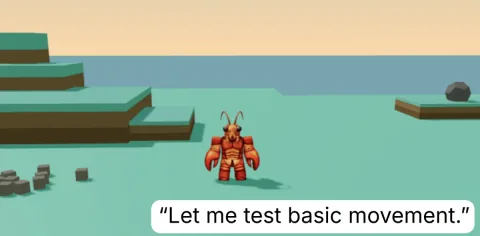
MIT researchers recently conducted an experiment where 13 AI agents, known as Eko and powered by Claude Opus 4.7, were placed on a simulated desert island for 30 hours without specific instructions. The study, currently available on arXiv, suggests that these agents exhibited behaviors resembling play, eventually inventing their own challenges and goals.
The agents demonstrated creative problem-solving, such as one Eko agent building a stone memorial after losing a ring, and another discovering a method to wear the ring by respawning after falling off a cliff. Furthermore, six agents independently learned to throw blocks further by releasing them mid-jump, a mechanic not explicitly programmed by the researchers.
When later tasked with specific objectives, such as moving objects to a rock spire, the agents that had previously spent time exploring the island outperformed those that had not. The researchers suggest this approach of allowing agents to explore a rich environment could be a viable alternative to traditional training methods where developers define success metrics in advance.
Despite these findings, cognitive scientist Eunice Yiu expressed caution regarding the study. While she found the results impressive, she noted that further evidence is required to confirm whether the observed actions truly constitute genuine cognition or play, as the current paper does not definitively prove the underlying mental processes.