ข้อมูลสำคัญ
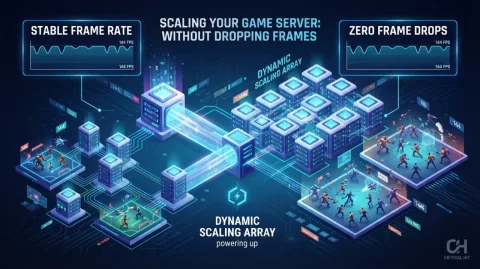
Scaling a multiplayer game server requires addressing performance bottlenecks that cause simulation delays or rubber-banding, even when client-side frame rates remain stable. Developers must choose between dedicated and listen server architectures, as well as client-server or peer-to-peer models, to manage player interactions effectively.
To maintain performance, administrators should implement load balancing using match allocators and geographic distribution to reduce latency. Scaling strategies include vertical scaling, which upgrades individual server hardware, and horizontal scaling, which adds more servers to distribute the workload. While vertical scaling is easier to implement, horizontal scaling offers greater flexibility for significant growth.
Real-time monitoring of key performance indicators like CPU usage, memory, and packet loss is essential for identifying issues. Tools such as Prometheus or Datadog help visualize these metrics. Furthermore, developers should conduct load testing to simulate various player behaviors and identify capacity limits before official launches.
Finally, optimizing network bandwidth by prioritizing critical updates and using CDNs for asset distribution can improve responsiveness. Regular maintenance, including profiling server simulations for expensive calculations and testing compatibility before updates, ensures long-term stability. These practices help developers maintain consistent performance as player counts increase.