Informasi penting
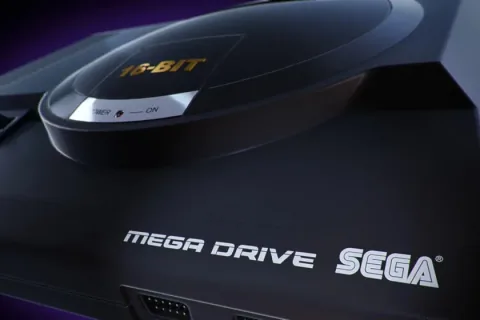
When Sonic the Hedgehog launched, it challenged the rigid, grid-based platforming norms of the early 90s. The game achieved high-speed, fluid movement through complex loops without frame rate drops, despite the Mega Drive lacking specialized hardware for such performance.
The console's Motorola 68000 processor at 7.67 MHz struggled with complex trigonometric calculations required for curved surfaces. To overcome this, Yuji Naka designed a custom engine that utilized pre-calculated data tables stored within the cartridge, allowing the system to look up movement responses rather than processing real-time math.
The physics system relied on two sensors measuring ground distance to determine slope angles, which the code then matched against the pre-calculated table. By separating movement physics from visual animations, the game maintained a consistent 60 FPS. Additionally, Naka optimized performance by using sequential instruction writing and placing off-screen elements into a suspension mode.
SEGA famously marketed this performance as Blast Processing, a myth suggesting the console contained a secret chip. In reality, the speed resulted from software optimization. This achievement remains a significant engineering lesson, demonstrating how to maintain high performance with only 64 KB of RAM.