Key information
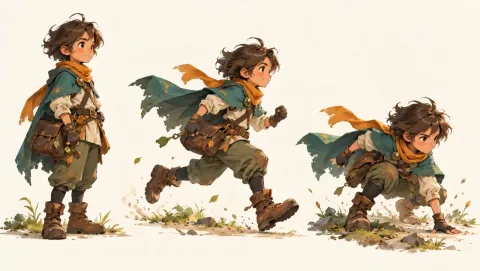
When commissioning spine animation, development teams utilize an animation brief to align illustrators, animators, and developers regarding character behavior and appearance. Before production begins, teams must decide upon required actions such as standing, running, jumping, and landing, sketching primary positions before establishing bone placement to ensure the skeleton supports the desired motion.
Illustrations must be prepared for movement by separating parts requiring independent movement and painting areas typically hidden beneath them, ensuring overlapping coverage for hair, sleeves, and satchels to prevent exposing seams during motion. Additionally, timing requires careful attention from animators and combat designers to agree on contact and control return points using real-time player input rather than solely relying on looping previews.
For outsourced animation briefs, teams should provide approved artwork, gameplay captures, weight and speed references, required actions, looping clips, and specific engine, Spine editor, and runtime versions. Teams are advised to animate one representative character first to test version compatibility and identify scale or handoff issues before producing a larger batch.
Finally, performance must be checked in a busy scene including expected crowds, environments, UI, and special effects on target hardware. Spine's Metrics view can be used alongside engine profiling tools to identify bottlenecks related to bones, vertex transformations, and rendered surface area.