Key information
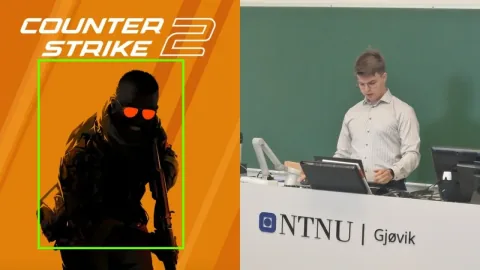
Magga_, a CS2 player studying at the Norwegian University of Science and Technology, focused their master's research on using operational habits to identify whether different accounts belong to the same person. Their "CS digital fingerprint" reads match demo records while analyzing mouse movements and keyboard inputs. The purpose is to help identify users switching accounts, not to replace existing anti-cheat tools.
Test data cited in the report includes over 1,000 players. The researcher stated that mouse signals can place the correct player at the top of the recognition results, while the corresponding recognition rate for keyboards is 98%. Additionally, they compared about 500,000 pairs of stranger accounts and 13 pairs of confirmed same-person accounts. These data come from research tests and do not yet represent the actual false positive rate of the entire gaming population.
The process first filters potentially related accounts, then requires mouse and keyboard signals to each reach a threshold. High similarity in only one area is not enough to establish a link, and new accounts must also accumulate several matches to form more reliable characteristics. Accounts shared by multiple people mix different operational habits, which is also a limitation the method needs to face.
Magga_ emphasized that this result cannot currently be used alone as evidence to ban players. They hope Valve or third-party platforms can further verify it in real-world usage environments and use account association alongside other evidence. This remains a proposal put forward by the researcher and is not a new ban system deployed by Valve.